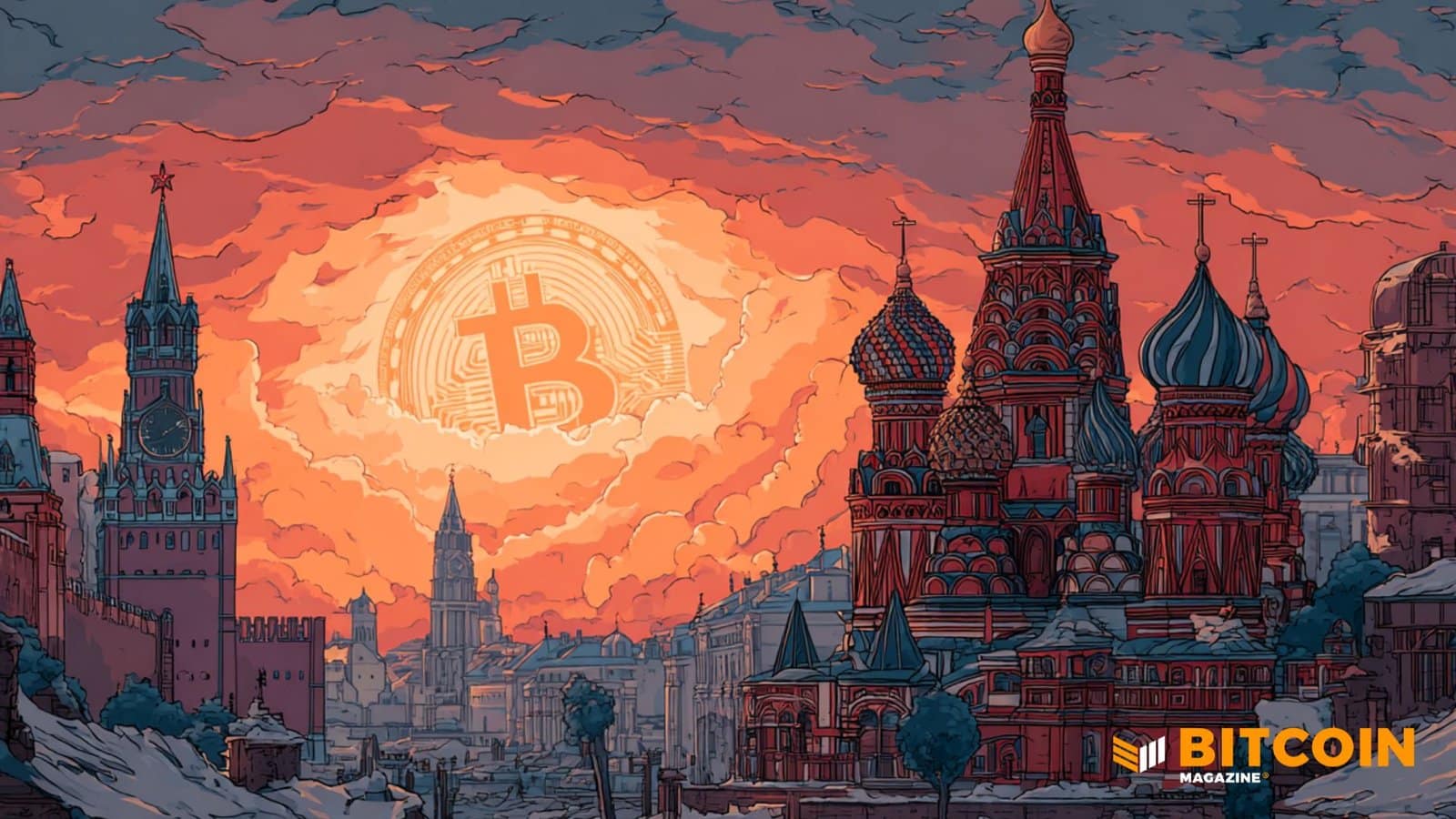

Russia’s second-largest lender, VTB, is positioning itself to turn into the primary main financial institution within the nation to let clients commerce bitcoin and crypto straight.
Andrey Yatskov, head of VTB’s brokerage arm, instructed Russian outlet RBC that consumer demand for “actual” crypto — not simply spinoff merchandise — is rising sharply. “As we see it, actual cryptocurrency shall be accessible for buy through our brokerage accounts,” he stated, in response to DLNews reporting.
The transfer comes even though crypto buying and selling stays unregulated in Russia. For now, banks can solely supply crypto-linked derivatives, a permission granted earlier this 12 months to VTB, rival Sberbank, and the Moscow Alternate.
However momentum in Moscow has turned. After years of pushing for a full ban, the central financial institution has not too long ago signaled it is able to regulate crypto as an alternative, reflecting mounting strain from lawmakers, ministries, and companies looking forward to a authorized framework — and tax income.
VTB plans to check its buying and selling platform with “super-qualified purchasers,” these holding over $1.3 million in belongings or incomes greater than $649,000 a 12 months.
The financial institution expects broader permission as regulators ease restrictions, a shift the central financial institution’s first deputy governor called a “strategic response to sanctions regimes.”
Industrial banks now see themselves taking part in a central position in a future market of licensed crypto brokers and depositories.
Yatskov stated clear guidelines would “undoubtedly enhance” transparency and confirmed VTB intends to take part as soon as laws are finalized.
Crypto is already discovering new footholds in Russia, from cross-border funds to a quickly increasing industrial mining sector.
With the tide turning, VTB goals to launch full crypto buying and selling providers as early as 2026. Earlier this 12 months, the Financial institution of Russia reportedly started permitting home banks to conduct restricted crypto operations beneath tight regulatory oversight.
“We maintain conservative views and take into consideration how acceptable it’s for the banking sector to incorporate cryptocurrency in its belongings,” First Deputy Chairman Vladimir Chistyukhin stated on the time.
Kremlin adviser pushes to categorise crypto mining as an export in Russia’s commerce accounts
Within the meantime, a senior Kremlin official is saying that Russia ought to deal with crypto mining as a proper export sector, arguing that giant volumes of mined Bitcoin successfully go away the nation’s financial system even with out crossing a bodily border.
Talking on the ‘Russia Calling!’ funding discussion board, Maxim Oreshkin — Deputy Chief of Employees to President Vladimir Putin — said crypto flows are “monumental” but absent from official statistics, regardless of influencing the foreign-exchange market and Russia’s stability of funds.
Russia legalized industrial crypto mining in 2024, and Oreshkin described the sector as a “new and undervalued export merchandise” that the state fails to correctly measure.
As a result of Russian corporations more and more settle import payments with cryptocurrency, he stated, these transactions must be counted within the nation’s commerce and foreign money calculations.
Business executives say the size justifies the shift. Through Numeri Group CEO Oleg Ogienko estimates Russian miners will produce “tens of hundreds” of BTC this 12 months. Sergey Bezdelov, head of the Industrial Mining Affiliation, put output at roughly 55,000 BTC in 2023 and round 35,000 BTC in 2024 following Bitcoin’s halving.
Regulators have tightened oversight because the sector expands. Corporations and sole proprietors should register with the Federal Tax Service, internet hosting suppliers are tracked in a devoted registry, and miners face company tax charges as excessive as 25%.
Family miners stay exempt from registration provided that their energy consumption stays beneath 6,000 kWh monthly.
The push to formalize the trade comes as authorities crack down on unlawful operations that siphon electrical energy and evade taxes — losses officers say run into the hundreds of thousands. However with Russia now the world’s No. 2 Bitcoin-mining nation, strain is mounting for Moscow to combine the fast-growing sector into its nationwide accounts.
The content published on Finance Insider Today is for informational and educational purposes only. It does not constitute financial advice, investment advice, or any other form of professional advice. Always conduct your own research and consult a qualified financial advisor before making any investment decisions. Finance Insider Today is not responsible for any financial losses resulting from decisions made based on information published on this website. Past performance is not indicative of future results. Financial markets carry significant risk. Never invest more than you can afford to lose.
