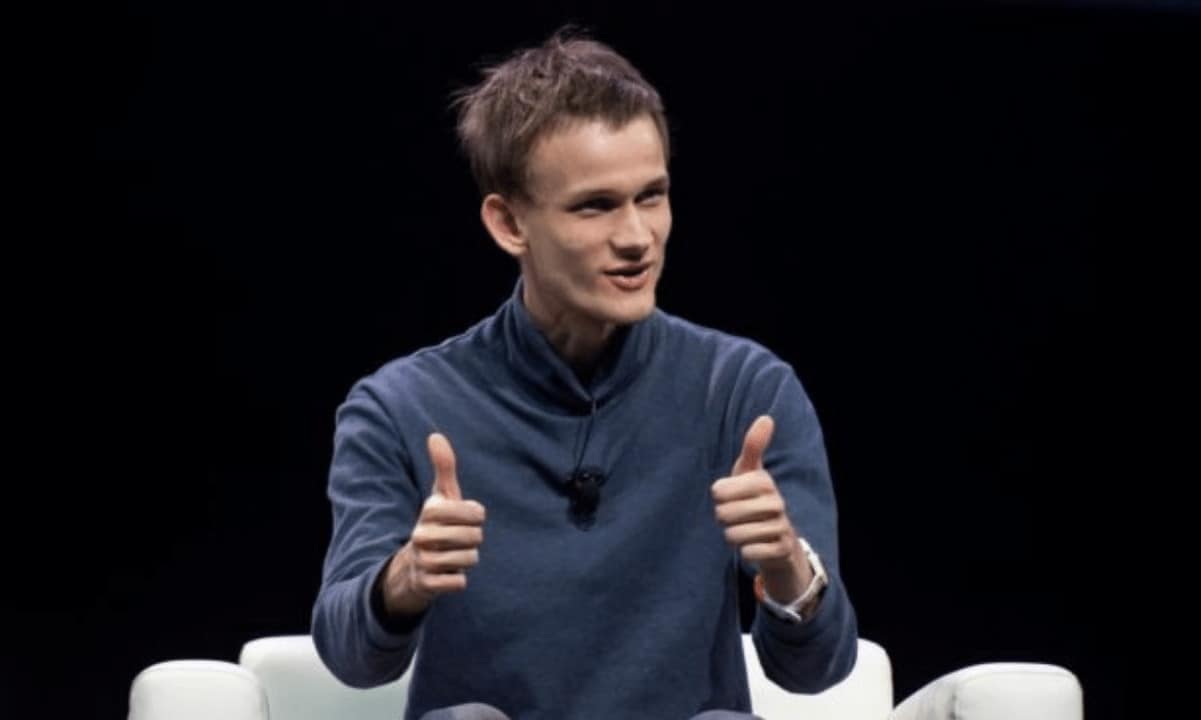

Buterin frames Ethereum’s progress as a structural shift, not a efficiency tweak, pointing to dwell code already reshaping the community.
Ethereum co-founder Vitalik Buterin over the weekend declared that the blockchain trilemma, the long-held perception {that a} community can not concurrently obtain decentralization, safety, and scalability, has been solved.
His assertion marks a pivotal declare for the ecosystem, asserting that this breakthrough is not theoretical however is being realized by dwell know-how on the community.
Stay Upgrades Shift Ethereum’s Community Design
In an in depth publish shared on X on January 3, Buterin argued that the rollout of PeerDAS on Ethereum’s mainnet, mixed with zero-knowledge Ethereum Digital Machines (ZK-EVMs) reaching the alpha stage, has modified what the community can do in follow.
“The trilemma has been solved—not on paper, however with dwell operating code,” he wrote.
Buterin additionally famous that information availability sampling is already lively, whereas ZK-EVMs have reached “production-quality efficiency,” with security work nonetheless ongoing.
He in contrast Ethereum’s present construction with earlier peer-to-peer programs corresponding to BitTorrent, which he mentioned supplied excessive bandwidth however lacked consensus, and Bitcoin, which he claimed had achieved robust consensus and decentralization at the price of throughput.
In keeping with the developer, with PeerDAS and ZK-EVMs, Ethereum now combines all three, permitting excessive bandwidth with out central management. He described the shift as “not minor enhancements” however a transfer towards “a essentially new and extra highly effective sort of decentralized community.”
Buterin’s publish additionally outlined a multi-year roadmap. He expects bigger fuel restrict will increase in 2026, early alternatives to run ZK-EVM nodes, and additional changes by 2030 as ZK-EVMs turn into a major approach to validate blocks. He added that distributed block constructing continues to be a longer-term objective to scale back central factors of management in transaction ordering.
You may additionally like:
Neighborhood response mirrored each pleasure and debate. CryptoSensei wrote that these adjustments “aren’t incremental tweaks” and careworn that PeerDAS being dwell makes the claims more durable to dismiss as concept.
Nevertheless, others, like Solana developer Mert Mumtaz, dismissed the blockchain trilemma as an outdated idea.
“It’s not an actual factor. the trilemma doesn’t truly exist right now,” he mentioned on X.
Why Decentralization Nonetheless Issues
The Ethereum architect’s feedback comply with earlier warnings about centralization dangers. In his New Yr’s message, he mentioned the blockchain’s future relies upon not simply on upgrades however on protecting decentralization and value intact because it grows.
That concern gained traction in 2025, a 12 months marked by main upgrades corresponding to Pectra and Fusaka, but additionally by criticism that Ethereum more and more relied on layer-2 networks and huge staking operators.
Market efficiency added to the strain, with the value of the community’s native ETH token lagging in 2025 regardless of greater utilization, institutional curiosity, and file improvement exercise, fueling doubts about whether or not technical progress alone can translate into investor confidence.
Analysts say Buterin’s newest message reframes the dialogue. Fairly than arguing about short-term value strikes, it locations give attention to whether or not Ethereum can assist large-scale functions with out censorship, downtime, or extreme prices. As Daniel Tschinkel pointed out in a latest social publish, customers in the end belief programs that work constantly and predictably.
SECRET PARTNERSHIP BONUS for CryptoPotato readers: Use this link to register and unlock $1,500 in unique BingX Trade rewards (restricted time provide).
The content published on Finance Insider Today is for informational and educational purposes only. It does not constitute financial advice, investment advice, or any other form of professional advice. Always conduct your own research and consult a qualified financial advisor before making any investment decisions. Finance Insider Today is not responsible for any financial losses resulting from decisions made based on information published on this website. Past performance is not indicative of future results. Financial markets carry significant risk. Never invest more than you can afford to lose.
