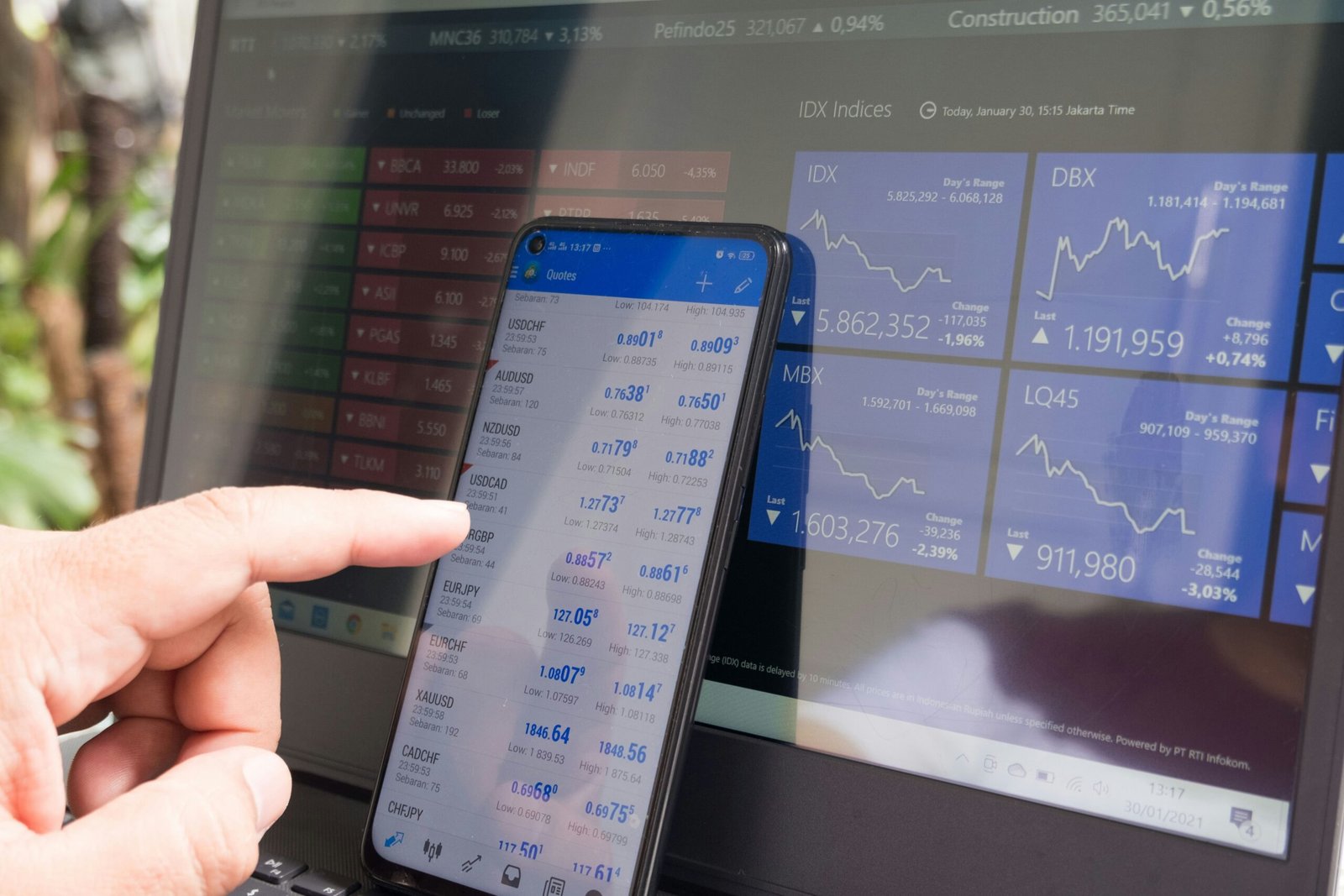

If you have ever wondered what is forex trading, this guide will explain everything in plain language. Every time you exchange money at an airport, check the exchange rate on your banking app, or hear that the dollar strengthened against the euro, you are brushing up against the foreign exchange market. Most people think of it as something that only matters to international travelers or import-export businesses. In reality, forex is the largest financial market on the planet, and it dwarfs everything else.
The forex market sees approximately $7.5 trillion in transactions every single day. To put that in perspective, the entire New York Stock Exchange trades roughly $25 billion per day. Forex is about 300 times larger. Understanding how this market works is valuable whether you intend to trade currencies or simply want to understand the forces that move exchange rates and affect the global economy.
What Is Forex Trading and How Does It Work?
The simplest way to explain what is forex trading is this: it is buying one currency while selling another.
Forex, short for foreign exchange, is the global marketplace where currencies are bought and sold. Unlike the stock market, there is no central exchange building. Forex is decentralized. It operates through a global network of banks, financial institutions, brokers, and individual traders connected electronically. The market runs 24 hours a day, five days a week, starting Monday morning in Sydney and closing Friday evening in New York.
Currencies are always traded in pairs. When you buy one currency, you are simultaneously selling another. The EUR/USD pair, for example, represents how many US dollars it takes to buy one euro. If the EUR/USD rate is 1.10, that means one euro costs $1.10.
How Currency Pairs Work
Every forex quote has two prices: the bid (the price at which you can sell) and the ask (the price at which you can buy). The difference between these two prices is called the spread, which is essentially the broker’s fee. Understanding what is forex trading starts with knowing that currencies are always traded in pairs. A key part of learning what is forex trading is understanding how pips and spreads affect your profits.
Currency pairs fall into three categories. Major pairs involve the US dollar paired with other large economies: EUR/USD, GBP/USD, USD/JPY, and USD/CHF are the most traded. Minor pairs are currencies from major economies that do not include the US dollar, like EUR/GBP or AUD/NZD. Exotic pairs involve one major currency and one from an emerging economy, such as USD/TRY (US dollar to Turkish lira) or EUR/ZAR (euro to South African rand). Exotic pairs tend to have wider spreads and higher volatility. Once you know what is forex trading, you will see why it attracts millions of traders worldwide.
What Moves Currency Prices?
Currency values are driven by a complex web of factors, but the most important ones are:
Interest rates. This is the single biggest driver. When a country’s central bank raises interest rates, its currency tends to strengthen because higher rates attract foreign investment seeking better returns. When the Federal Reserve raised rates aggressively in 2022 to 2023, the US dollar strengthened significantly against most other currencies.
Economic data. Employment reports, GDP growth, inflation numbers, and trade balances all influence currency prices. Strong economic data generally supports a stronger currency.
Geopolitical events. Elections, wars, trade disputes, and political instability cause currency volatility. The British pound, for instance, dropped sharply during the 2016 Brexit vote.
Market sentiment. Sometimes currencies move based on trader expectations rather than current data. If the market believes the European Central Bank will cut rates next month, the euro might weaken today in anticipation.
Key Forex Terminology
Pip. The smallest standard price movement in a currency pair. For most pairs, a pip is the fourth decimal place (0.0001). If EUR/USD moves from 1.1050 to 1.1051, that is a one-pip movement.
Lot. A standard trading unit. A standard lot is 100,000 units of the base currency. Mini lots (10,000) and micro lots (1,000) are also available, making forex accessible to smaller traders.
Leverage. What is forex trading without leverage? Most brokers offer leverage that lets you control larger positions with smaller capital. Forex brokers allow traders to control larger positions with a smaller amount of capital. A 50:1 leverage ratio means you can control $50,000 worth of currency with just $1,000. While leverage amplifies profits, it equally amplifies losses. This is the feature that makes forex both attractive and dangerous for beginners.
Spread. The difference between the bid and ask price. This is the cost of making a trade. Major pairs like EUR/USD typically have the tightest spreads (often less than one pip), while exotic pairs can have spreads of 10 pips or more.
Who Trades Forex?
The forex market has a diverse mix of participants. Commercial banks are the biggest players, trading currencies to facilitate international business and manage their own positions. Central banks intervene occasionally to stabilize their national currency. Multinational corporations trade forex to hedge their exposure to exchange rate movements, such as a European car manufacturer that earns revenue in US dollars but pays expenses in euros.
Hedge funds and institutional investors trade forex speculatively, seeking to profit from currency movements. And retail traders, individuals trading from their personal computers or phones, now account for a growing share of the market, facilitated by online brokers and mobile trading apps.
The Risks of Forex Trading
Forex trading carries significant risk, and it is important to be straightforward about this. Studies consistently show that approximately 70 to 80 percent of retail forex traders lose money. The reasons are predictable: overleveraging, lack of education, emotional trading, and underestimating how quickly losses can accumulate when using borrowed capital.
Leverage is a double-edged sword. While it allows you to control a large position with a small deposit, it also means a small adverse price movement can wipe out your entire account. A position leveraged at 50:1 only needs a two percent move against you to eliminate 100 percent of your capital.
If you are considering forex trading, start with a demo account offered by most brokers. Trade with virtual money until you have a clear strategy and understand the mechanics. Never trade money you cannot afford to lose, and never trade without a stop-loss order in place to limit potential losses.
Risk management is essential when learning what is forex trading — never risk more than you can afford to lose.
Forex vs. Stock Market: Key Differences
Trading hours. Forex operates 24/5. Stock markets have fixed hours (NYSE: 9:30 AM to 4:00 PM ET).
Leverage. Forex offers much higher leverage (up to 50:1 or more) compared to stocks (typically 2:1 for most retail accounts).
Market size. Forex is the largest market in the world. Individual currencies are less susceptible to manipulation by single entities.
Complexity. Stock investing can be done passively through index funds. Forex is almost exclusively an active trading market that requires constant attention and skill.
Want to learn more? Explore all our beginner guides to master the markets.
The Bottom Line
The forex market is the largest, most liquid financial market in the world, and understanding how it works is a valuable piece of financial literacy. That said, understanding how it works and trading it profitably are two very different things. If the currency market interests you, start by studying how macroeconomic forces drive exchange rates. Practice on a demo account. And approach it with the respect that a $7.5-trillion-a-day market deserves.
You now have a solid understanding of what is forex trading and how the currency market works.
The content published on Finance Insider Today is for informational and educational purposes only. It does not constitute financial advice, investment advice, or any other form of professional advice. Always conduct your own research and consult a qualified financial advisor before making any investment decisions. Finance Insider Today is not responsible for any financial losses resulting from decisions made based on information published on this website. Past performance is not indicative of future results. Financial markets carry significant risk. Never invest more than you can afford to lose.
